
Most organizations struggle to scale digital initiatives without a clear plan. A digital platform strategy provides the roadmap. It defines how platforms are built, governed, and scaled to meet real business objectives.
Without it, efforts remain fragmented, costly, and disconnected from user needs. In this guide, we cover everything from core definitions to practical steps, benefits, challenges, and proven best practices, giving you a complete framework to act with confidence.
In this guide, we explain what it means, why it matters, and how to put it into practice step by step.
Key Takeaways
- A digital platform strategy ensures digital initiatives align with business goals and measurable outcomes.
- It connects critical elements, platform technologies, governance, and data, with user engagement to drive adoption.
- Following a step-by-step approach, organizations can move from defining goals to launching a minimum viable product, deploying governance, and scaling with confidence.
- Benefits include stronger engagement, economic impact, and sustainable growth across the platform ecosystem and broader platform economy.
- Challenges such as low adoption or weak measurement can be avoided with clear goals, analytics, and structured engagement activities.
What Is a Digital Platform?
A digital platform is a structured environment that connects users, data, and services in one place. It improves user experience by enabling interactions, transactions, and knowledge sharing. Examples include e-commerce platforms, enterprise platforms, and community hubs that drive collaboration and value exchange.
What Is Digital Platform Strategy?
A digital platform strategy is the structured plan that defines how platforms are created, managed, and expanded to support organizational goals. It aligns platform technologies, governance, and processes to deliver a clear value proposition. By doing so, it ensures platforms remain adaptable, scalable, and relevant in fast-moving markets.
Components of a Digital Platform Strategy
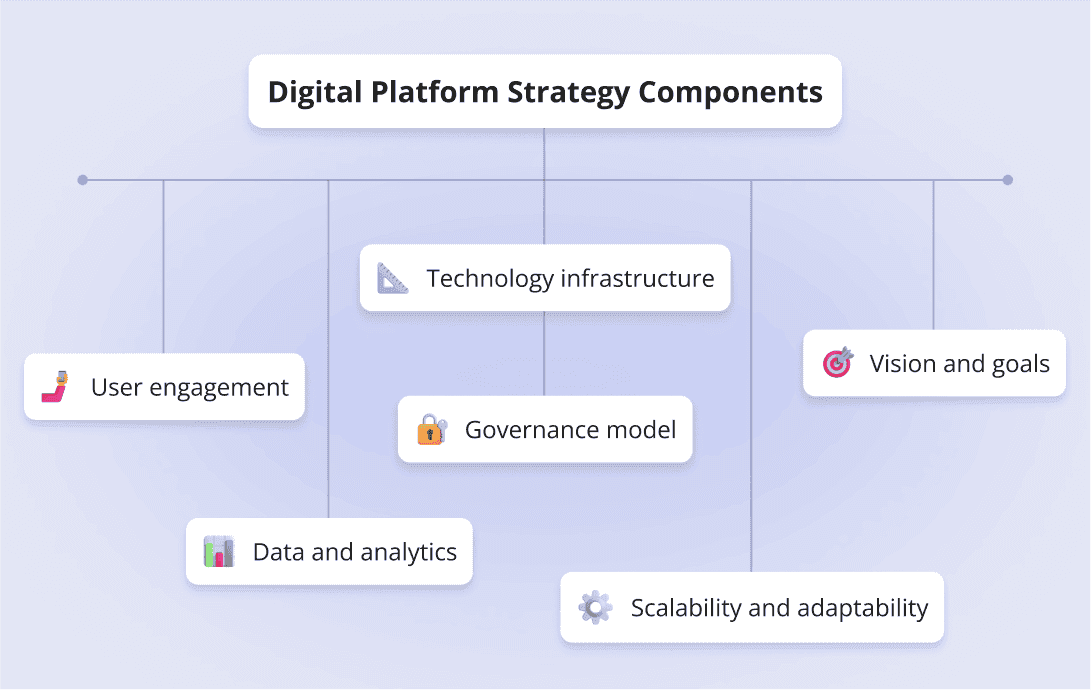
A strong strategy combines business direction with technical execution. It provides clarity for leaders, IT teams, and platform adopters, ensuring decisions improve both performance and sustainability. Once the execution side starts, our companion guide on how to build a custom web app shows the no-code stack and rework patterns most teams hit.
Key components include:
- Vision and goals: Define outcomes the platform must achieve, such as growth or efficiency.
- Governance model: Roles, policies, and accountability frameworks for platform management.
- Technology infrastructure: Reliable platform ecosystem supported by integrations, APIs, and secure data handling. LoftOS provides adaptable building blocks like custom modules and matchmaking tools.
- User engagement: Focus on Digital Experience Platform design to create intuitive, accessible journeys.
- Data and analytics: Measure activity, performance, and impact for continuous improvement.
- Scalability and adaptability: Ensure the system can support more users, new services, or enterprise platforms without disruption.
Step-by-Step Guide to Building a Platform Strategy
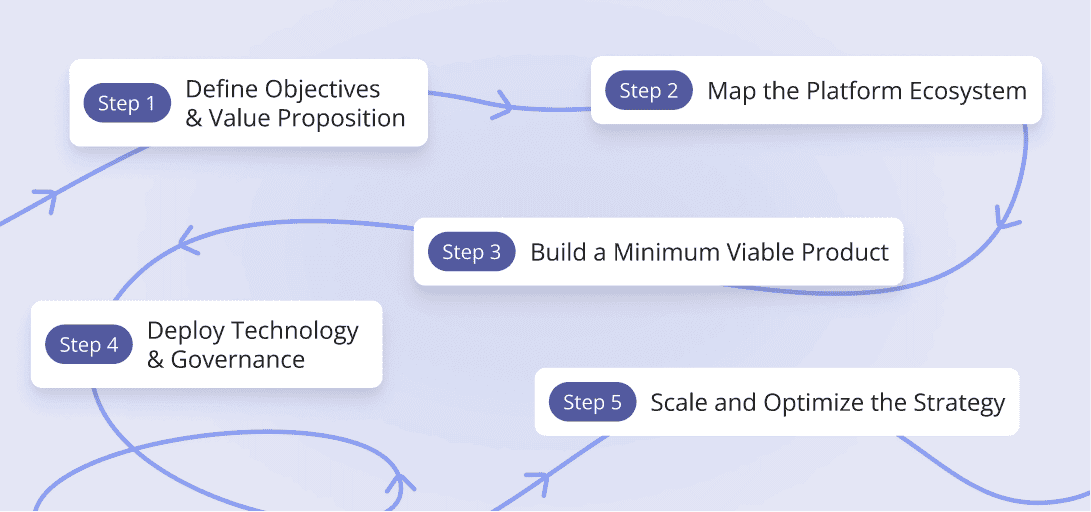
A digital platform strategy is only useful if it can be put into practice. Here are five steps that show how to move from planning to measurable outcomes. Our companion guide on how to build a digital platform covers the execution side — modules, stack, and the no-code path from MVP to scale.
Step 1: Define Objectives and Value Proposition
Start by clarifying what the platform should achieve. A clear value proposition sets direction for your team and expectations for platform adopters. Objectives might include stronger community engagement strategies, faster knowledge sharing, or new revenue streams. Without defined goals, every other step risks falling short.
Step 2: Map the Platform Ecosystem
Identify who will use the platform and how they interact. A strong platform ecosystem connects members, partners, and stakeholders through an intuitive Digital Experience Platform. `For example, when outlining user groups, think of admins, contributors, and external partners. LoftOS provides building blocks like member directories and content spaces that simplify this mapping. See how community leaders succeed in building B2B communities.
Step 3: Build a Minimum Viable Product
Avoid overengineering at the start. Launch a minimum viable product to test your assumptions with a smaller audience before scaling. In the platform economy, speed matters. LoftOS enables organizations to create prototypes with custom modules quickly, validating engagement before committing large budgets. Learn more from our guide on how to build community frameworks.
Step 4: Deploy Technology and Governance
Execution depends on the right platform technologies and governance model. Define rules for data use, privacy, and accountability. Modern enterprise platforms must balance security with usability. LoftOS simplifies deployment through drag‑and‑drop modules, integrated event tools, and secure data handling. Explore more in our article on managing technology ecosystems.
Step 5: Scale and Optimize the Strategy
Once the foundation is stable, focus on growth. This includes expanding user groups, refining features, and aligning with broader organizational transformation goals. Tracking performance is essential to guide platform technology strategy and ensure results. With analytics and engagement features, LoftOS supports scaling digital communities without major IT effort.
Benefits of Platform Strategies
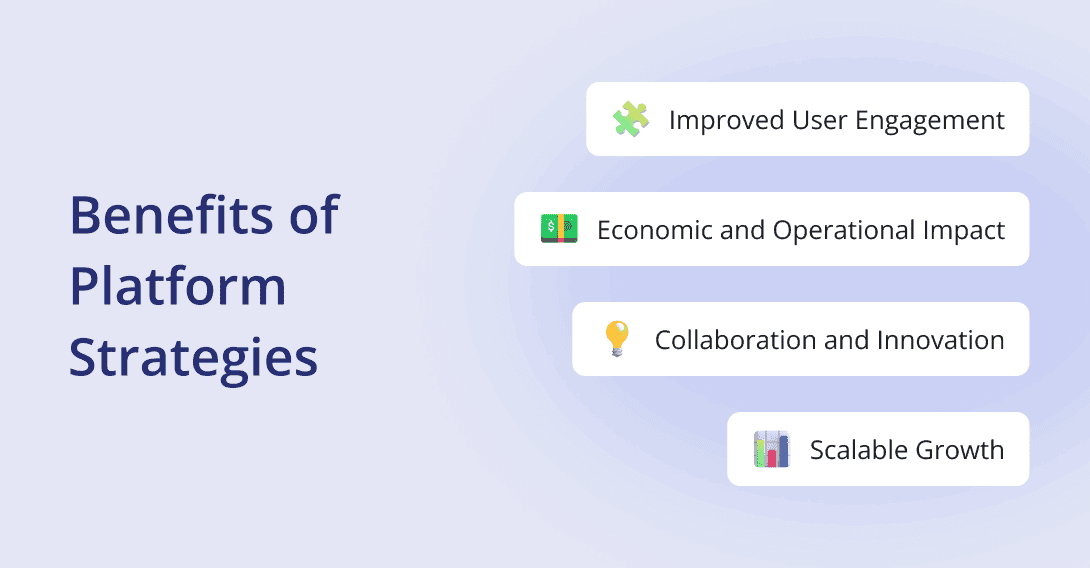
A strong digital platform strategy brings measurable value to both organizations and users. Here are the main benefits:
- Improved User Engagement: A well-designed Digital Experience Platform ensures smoother interactions and long-term loyalty. This is the foundation of community-led growth, where engagement drives adoption.
- Economic and Operational Impact: By consolidating services into unified enterprise platforms, organizations save costs, reduce inefficiencies, and support digital business transformation without lengthy IT projects.
- Scalable Growth: With a clear framework, platforms can expand to new markets and audiences, strengthening the platform economy. Using analytics and feedback loops ensures decisions are data-driven and sustainable.
- Collaboration and Innovation: A healthy platform ecosystem encourages knowledge-sharing and partnerships, fostering innovation. Learn more about the tangible benefits of building online communities that generate long-term value.
Together, these benefits make platform strategies a cornerstone of modern organizational growth.
Common Challenges & How to Overcome Them
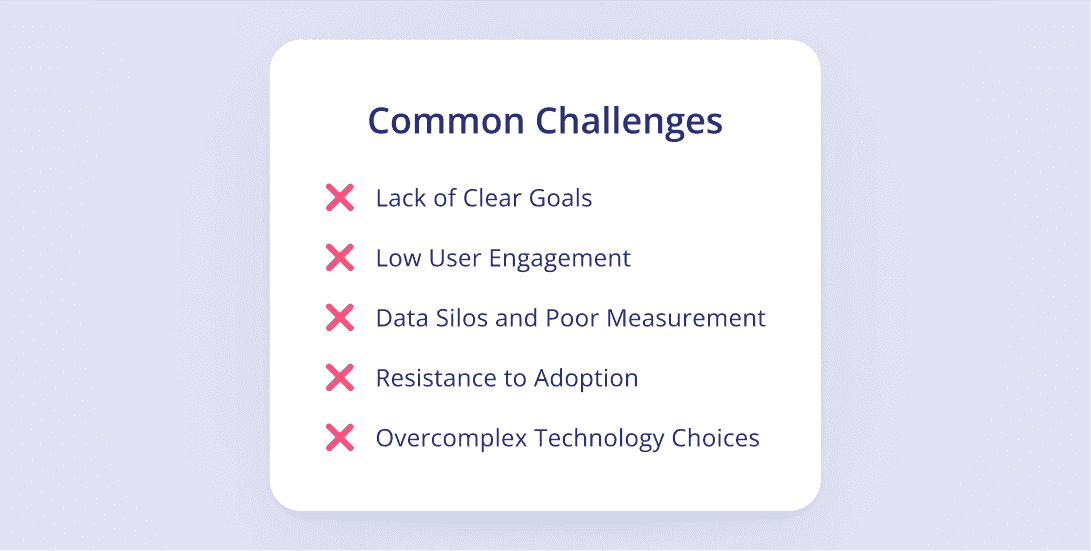
Even the best digital platform strategy will fail without anticipating obstacles. Here are five common challenges and how to address them.
Challenge 1: Lack of Clear Goals
Many organizations jump into platforms without defined outcomes, which derail organizational transformation efforts. Without measurable objectives, success is impossible to track.
Pro Tip: Always link goals to business outcomes and define key results upfront. This ensures your platform aligns with leadership priorities and avoids wasted resources.
Challenge 2: Low User Engagement
A platform without active users quickly becomes irrelevant. When platform adopters don’t participate, the Digital Experience Platform loses value.
Engagement grows when admins design relevant spaces, useful content, and interactions that reward participation. A proven approach is implementing structured community engagement activities that encourage regular contributions and spark dialogue.
Challenge 3: Data Silos and Poor Measurement
Leaders need evidence that platforms work. Without integrated analytics, insights stay locked in silos. Weak reporting undermines the platform technology strategy and leads to uninformed decisions.
Pro Tip: Bake in analytics from the start. Tools that track member activity and outcomes make it easier to prove ROI. Explore how community engagement metrics reveal which actions truly drive results.
Challenge 4: Resistance to Adoption
Even well-designed platforms face hesitation from staff and stakeholders. Some teams resist change because workflows feel disrupted. This slows growth of the platform ecosystem.
Pro Tip: Start small with early adopters and champions who showcase benefits. Visible success stories build trust and encourage broader participation across the organization.
Challenge 5: Overcomplex Technology Choices
Many organizations overbuild, choosing heavy platform technologies or sprawling enterprise platforms that take months to implement. Complexity discourages users and stalls momentum.
Pro Tip: Pick adaptable, modular tools that scale with needs rather than overwhelm teams. Lightweight solutions like LoftOS show how platforms can remain simple without sacrificing capability.
By recognizing and tackling these issues early, organizations increase the odds of lasting success with their platform strategy.
Best Practices for a Successful Digital Platform Strategy
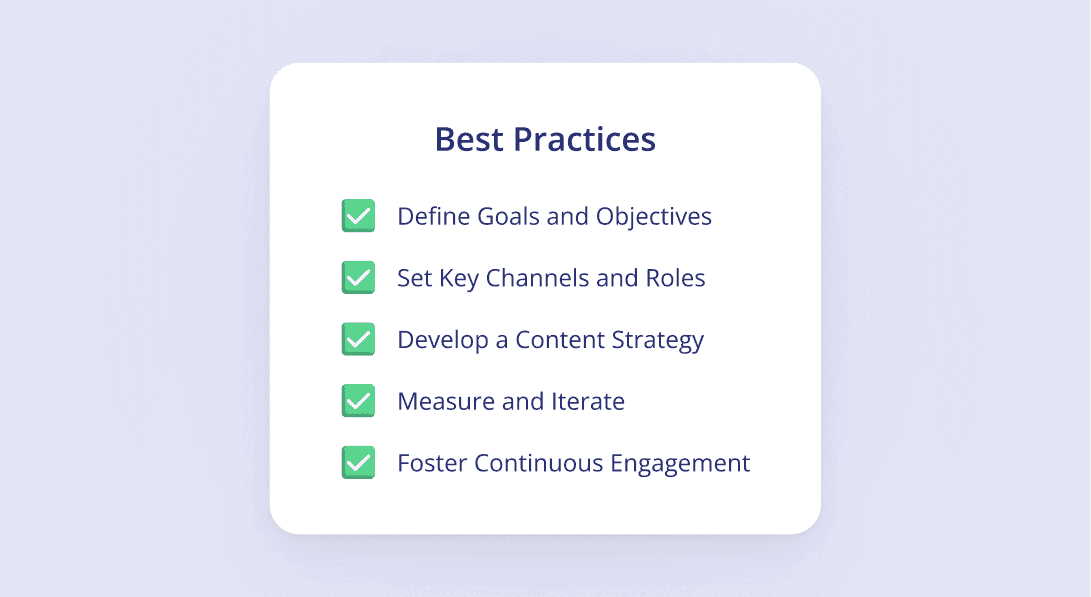
When readers scroll here, they expect clarity, not theory. These five best practices will give you a proven framework to make your digital platform strategy successful from day one.
Practice 1: Define Goals and Objectives
Every platform fails without a clear destination. Before writing a single line of code, define outcomes that matter: revenue growth, higher engagement, or knowledge sharing. A precise value proposition ensures platform adopters understand why they should join. Tools matter here too. As explored in our best no-code app builder guide, platforms built with focus scale faster.
Pro Tip: LoftOS stands out among no-code solutions for its speed, customization, and scalability, making it a reliable choice when clarity meets execution.
Practice 2: Set Key Channels and Roles
Without structure, collaboration gets messy. Decide early which communication channels exist and who manages them. This turns your Digital Experience Platform into an organized space instead of a noisy forum.
A good example is creating role-based hubs, similar to what’s explained in our resource on building community websites. LoftOS simplifies this by letting you design member areas with easy to use, flexible tools.
Practice 3: Develop a Content Strategy
Content keeps platforms alive. Without regular updates, even the strongest platform ecosystem goes silent. Map out an editorial plan that includes resources, events, and conversations that matter to your users.
The community engagement plan outlines how consistent publishing sustains loyalty. On LoftOS, admins can automate updates and newsletters, so content strategy becomes manageable instead of overwhelming.
Practice 4: Measure and Iterate
What isn’t measured can’t improve. Tracking data isn’t optional. It’s what separates growth from guesswork. A solid platform technology strategy includes KPIs that prove value to leadership and funders.
For practical guidance, this community strategy shows you how iteration cycles turn insights into improvements. LoftOS dashboards make it easy to see what’s working and what isn’t, without extra analytics tools.
Practice 5: Foster Continuous Engagement
Launching is only half the work. Sustaining momentum means ensuring platform adopters return, interact, and contribute regularly. This is how a thriving platform ecosystem forms.
Engagement grows through events, groups, and networking opportunities. LoftOS comes with a wide array of features like matchmaking or speed networking to encourage members to stay active, making engagement a natural habit instead of a forced effort.
By applying these practices, you give your platform not just a launchpad, but a long runway for success.
Simplify Your Platform Strategy with No-Code Solutions from LoftOS
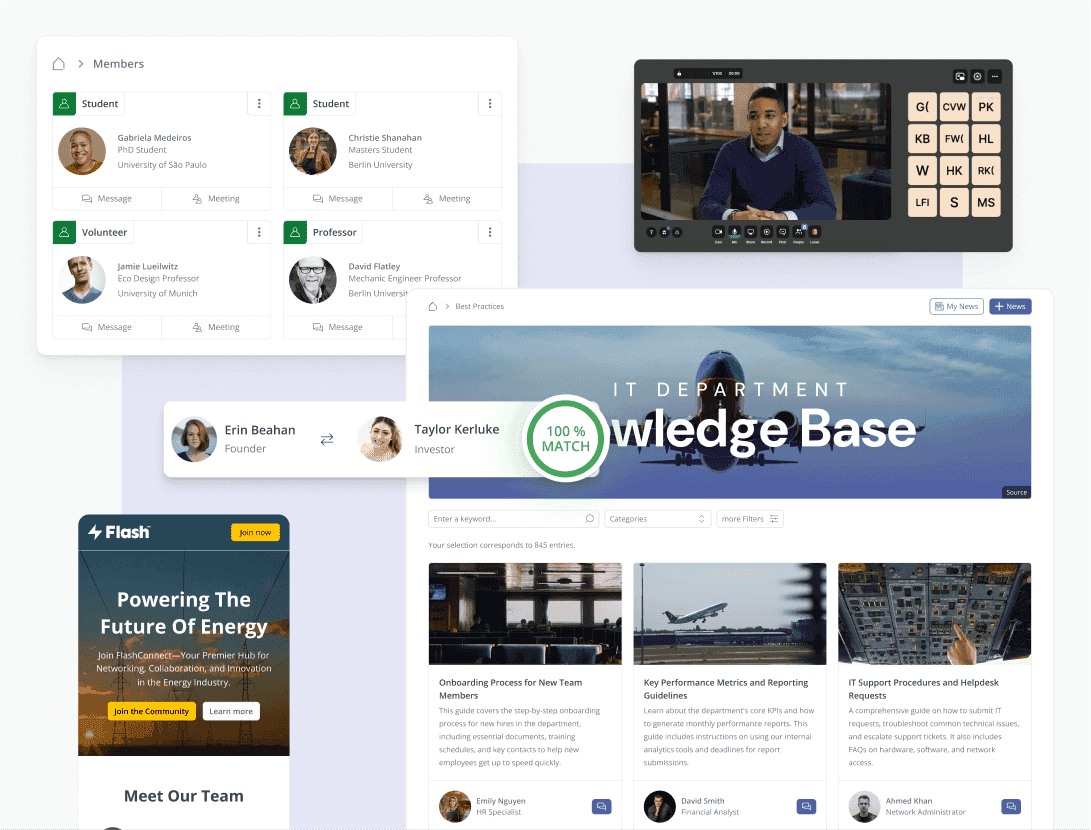
Running a digital platform strategy doesn’t need to be complex or time-consuming. With LoftOS, you get everything in one place: event management, member directories, databases, landing pages, chat, matchmaking, and networking tools.
It’s flexible, customizable, and built for organizations that want results without technical barriers. Discover the full LoftOS product overview, or explore how LoftOS makes strategy execution simple. The tools are ready, you just need to take the next step.

Florian Feuer is Co-Founder and CMO of Innoloft, where he leads the marketing and customer success teams. Since launching Innoloft in 2019, he has worked with more than 100 community and platform operators — economic development agencies, tech transfer offices, associations, innovation clusters and corporates — who build their own portals on LoftOS.