
Reseller Platform Software
Reselling, reimagined. Because your time is better spent closing deals
than dealing with more spreadsheets.
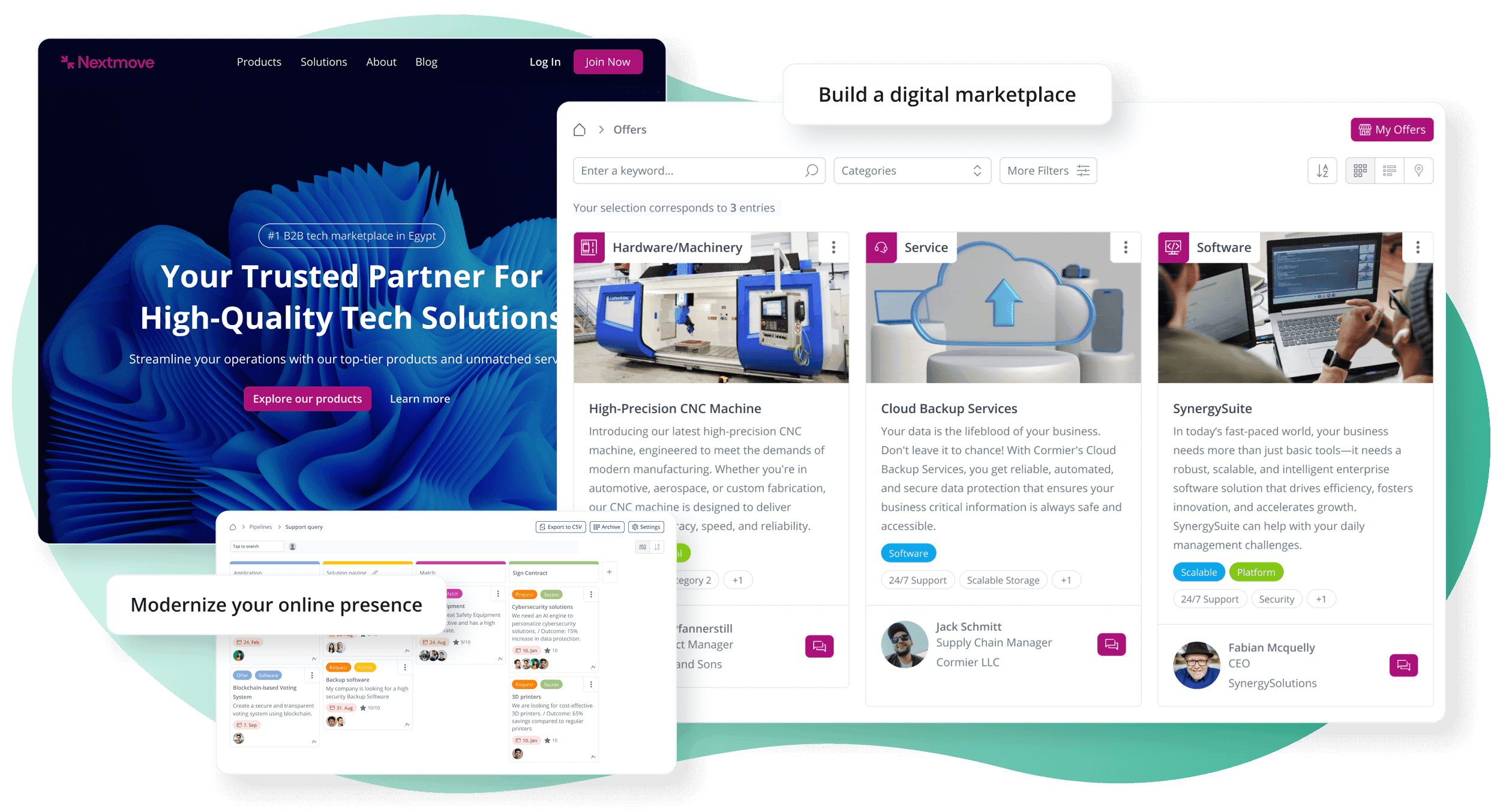
Customers who used this template

This is how you transform
your reseller network into a powerhouse of efficiency.
STREAMLINE
your entire reselling process with smart pipelines that turn chaos into clarity.
SHOWCASE
your brand and offerings 24/7 with sleek, customizable pages that do the selling for you.
ENERGIZE
your network with digital events that turn casual contacts into loyal partners.
AMPLIFY
collaboration with tools that keep your team and partners in sync, anytime, anywhere.
Is your sourcing process still stuck in the Stone Age?
Transform your manual headache into a streamlined digital powerhouse.
Cut communication clutter and watch your efficiency soar.
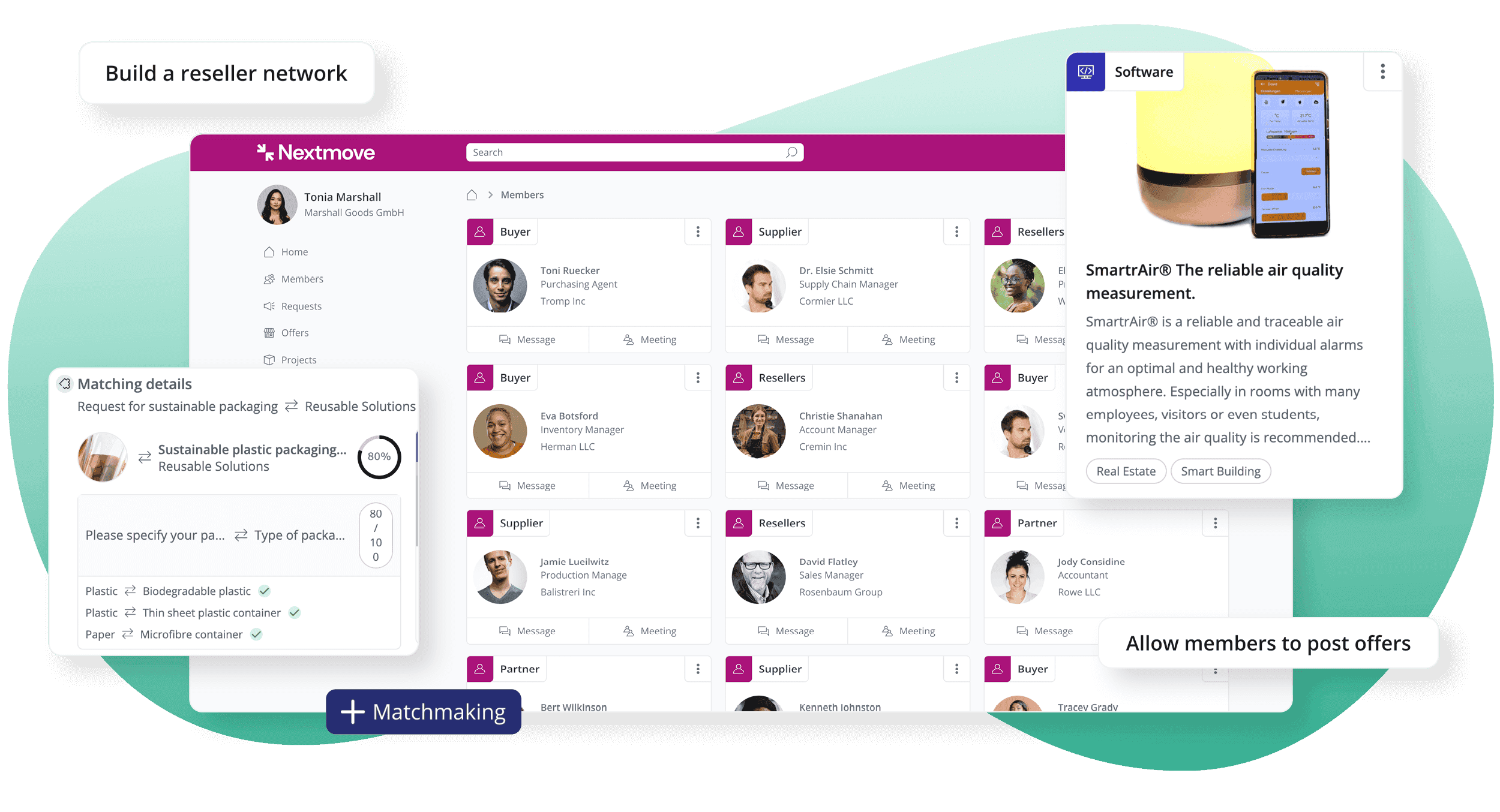
Digital marketplace magic
Turn your reseller platform into a bustling digital bazaar. Post supplier requests in a sleek online reselling format that attracts the best bidders.
Smart matchmaking
Our matching algorithm connects you with ideal suppliers, slashing your sourcing time. It’s reseller automation redefined.
Search simplified
Navigate your reseller network with ease. Our powerful search function turns finding the right partner from a needle-in-a-haystack task to a walk in the park.
Tired of data chaos in your reseller business?
Turn your scattered information into your secret weapon. Unearth insights, spark connections, and watch your reseller empire grow.
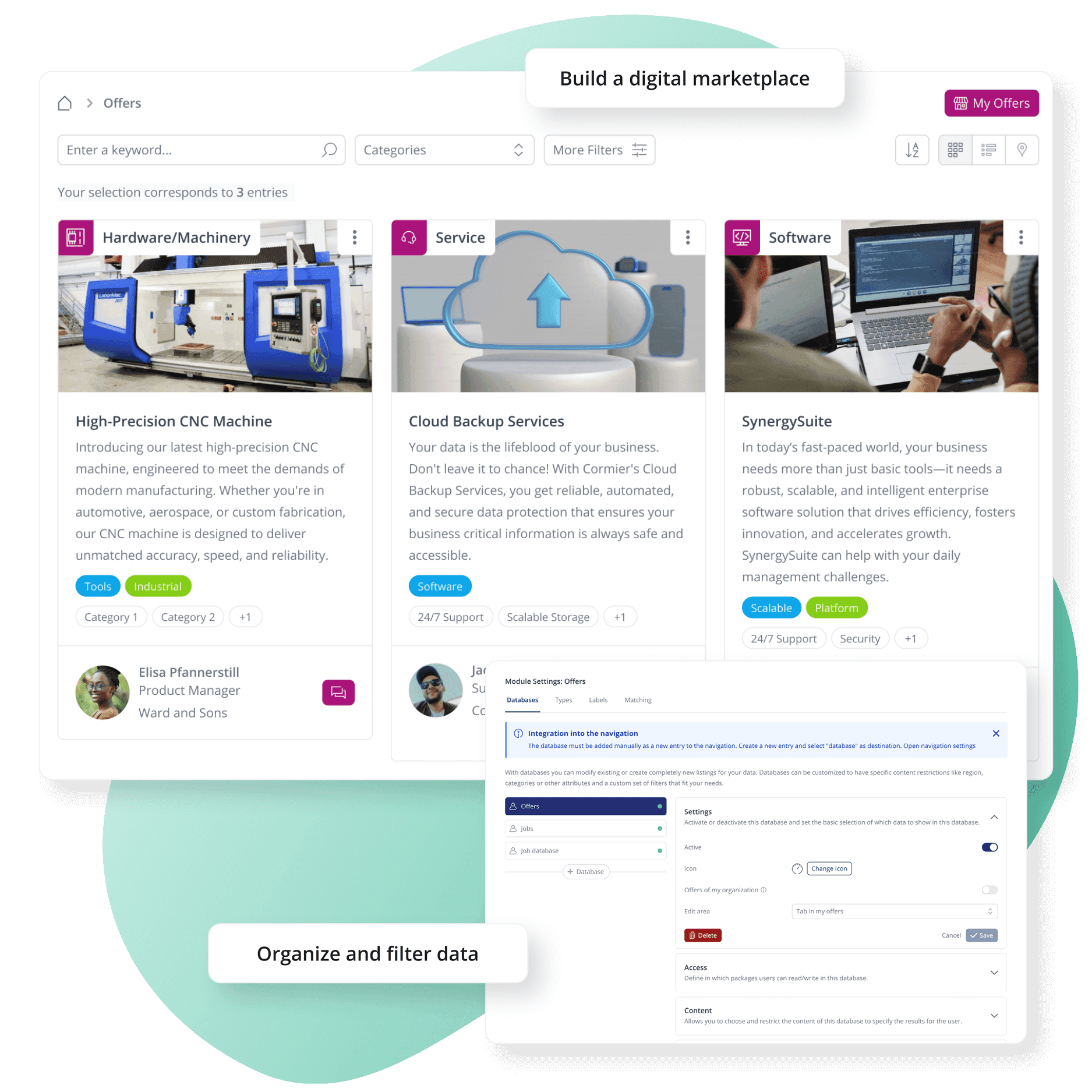
Spotlight your offerings
Build a reseller marketplace that stands out. Our flexible offer database lets you showcase solutions in a way that aligns perfectly with your unique reseller business model.
Data, your way
Say farewell to information overload. Create a reseller inventory management system with features to label, categorize, and filter offers, making data retrieval effortless for you and your clients.
Needs meet solutions
Create a thriving B2B reseller ecosystem with our Request module. Connect suppliers, investors, and project partners in a centralized hub that keeps your business moving forward.
Tailor-made marketplaces
Customize your reseller platform to fit your industry's unique needs. Our Request module adapts to your specific industry, ensuring your reseller platform becomes the go-to resource in your niche.
Is your reseller network
hitting a ceiling?
Unleash your scaling potential. Modernize your processes and open doors
to new growth opportunities and investor interest
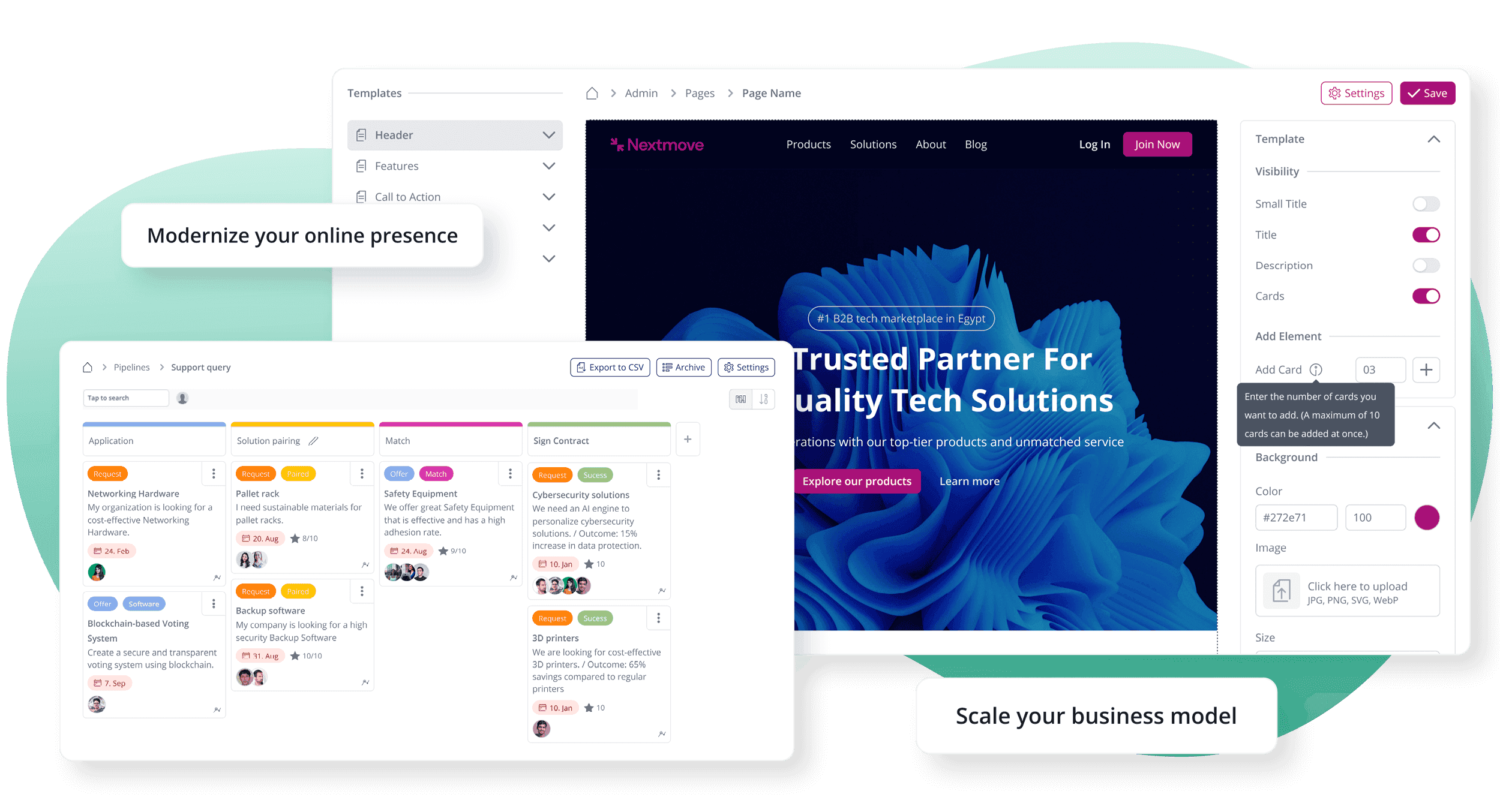
Future-proof your operations
Transform your reseller platform into a scalable powerhouse. Get all the tools you need to streamline sourcing and referrals at your fingertips, and grow without the growing pains.
Investor-ready infrastructure
Make venture capitalists sit up and take notice. Our reseller management software provides a modern, scalable foundation that turns your project into an attractive investment opportunity.
Enterprise-grade expansion
Roll out your reseller business model across your enterprise with ease. Our platform adapts to your size, whether you're a startup or a large enterprise.
What are you waiting for? Start building your Reseller Platform Software
Leverage the advantages
of our no-code platform
Be your own developer
Fast-track your digitalization journey
Cut software development cost by 80% with no-code flexibility
Find more insights related to building a Reseller Platform Software

Best practices
3 Types of Reseller Platforms to Boost Your B2B Sales
You've got a fantastic B2B product, but let's face it – getting it into the right hands can be a struggle. You need a sales strategy that's effective, efficient, and dare we say, even a little bit fun?Enter reseller platforms.
These digital tools easily connect you with business partners, buyers, distributors who are interested in reselling your product or service.No more awkward cold calls or fruitless networking events.Ready to take your B2B sales to the next level? This is a roadmap to help you get a better view of the digital landscape around B2B reseller platforms. We'll explore 3 types and how they can help supercharge your sales, simplify your operations, and build stronger partnerships. As a B2B reseller, understanding these reselling platforms is crucial for your success.What is the Reseller Business Model?At its core, a reseller buys products or services to sell them, not to use them. Essentially, a reseller sales products or services at a price higher than they purchased it. This strategy is crucial for widening distribution and accessing broader markets without producers having to sell directly. Resellers come in various flavors, let’s unpack the 3 most common ones: Retailers: They sell products directly to end consumers, often in smaller quantities, and may offer a curated selection of products from various manufacturers. Distributors: These resellers buy products in bulk from manufacturers and sell them to retailers or other businesses, often providing logistics and storage servicesValue-added resellers: They enhance the original product with additional features, services, or support, then resell the bundled solution to end customers. Each of these bring unique value based on their operations and service enhancements.Key to the reseller model is the relationship with the manufacturer or service provider, typically framed by agreements that set pricing, sales targets, and other rights. Resellers gain from selling sought-after products, supported by marketing, product info, and sometimes even training from the original provider.From tech to consumer goods, the reseller business model is adaptable across market sectors. In fact, by 2026, Gartner research says, 80% of B2B sales interactions between suppliers and buyers will occur in digital channels. All it takes is the specialization, meeting specific customer needs and of course, the right reselling platform.What is a B2B Reseller Platform?Let’s get the basics out of the way first, think of B2B reseller platforms as the bustling marketplaces of the digital age, crucial for swapping goods and services between businesses. B2B reseller platforms are the gears that keep digital commerce running smoothly. At their core, these platforms are built to handle the essentials — buying, selling, and managing transactions digitally, fast and without much hassle.And no, these aren't just websites; they're entire ecosystems designed to streamline everything from procurement to payments. Keep in mind, a well-designed reselling platform can revolutionize how you do business in the B2B space.However, B2B reseller platforms differ significantly from their B2C counterparts. B2B resellers face inherently more complex processes, with requirements varying greatly depending on the industry and type of goods being sold. This complexity necessitates flexible and tailored solutions that can adapt to the unique needs of each B2B transaction.Horizontal or Vertical?The differentiation between platforms often comes down to their orientation.Horizontal platforms offer broad solutions designed to serve a wide array of industries, with general tools that apply to many business types. Think of Alibaba, for example. In contrast, vertical platforms are tailored to specific industries, providing specialized services and features that cater directly to the unique needs of those sectors.The level of integration also sets these platforms apart. Some stick to arranging transactions, others go all-in, managing everything from payment processing to shipping and inventory management, and some are designed as partner portals where you can build a community for B2B resellers to access resources, exchange knowledge and get the training they need. This variety allows businesses to pick a platform that matches their needs, whether they're looking for a simple interface or a comprehensive business solution.How to Tell Reseller Platforms Apart? Understanding the differences between marketplaces and reseller platforms is key to finding the best option for your business. Each reselling platform we will discuss above has its unique features and benefits, catering to different business needs and strategies.Deciding where your business fits on this spectrum can greatly influence your scalability and operational costs. To help you navigate through this diverse landscape, we chose 3 types of reselling platforms and came up with this simple framework to help you understand them better as you read through this article:‘Who is the reseller?’: Aims to identify whether you or another entity is selling the products.‘Who owns the platform?’: Is this platform fully yours? Determine the ownership of the platform to understand the control and responsibility dynamics.‘What is the role of the reseller platform?’: Clarifies whether the platform acts merely as a facilitator or if it plays a more active role in transactions and customer interaction.This aims to make roles and responsibilities clearer, aiding in your strategic decision-making process as you select the ideal platform for your business operations.With that being said, let’s discuss the 3 most popular types of reseller platforms. Each of these reselling platform types offers distinct advantages, so it's crucial to understand which one aligns best with your business model. 3 Popular Types of Reseller PlatformsThird-Party B2B Reseller PlatformsWho is the reseller?: You are the reseller, utilizing the platform to reach a broad audience.Who owns the platform?: In this model, you’re not the platform owner, the company behind the platform is.What is the role of the reseller platform?: Third-party platform serve as a facilitator, handling logistics and providing data insights to support your sales efforts. Some can help you with sourcing, others can help you with reselling.Jumpstarting your B2B reseller business in this day and age has never been easier, thanks to third-party reseller platforms. With well-known hubs like Alibaba or Amazon Business, you gain instant access to a much later commercial environment primed for buying and reselling.These platforms are perfect for B2B resellers eager to focus on making sales and growing their customer base without the burden of managing backend logistics. When choosing a third-party reselling platform, consider factors like user base, fees, and integration capabilities.We can further divide third-party B2B reseller platforms in sourcing and selling, depending on their function. Let’s explore this further. The sourcing:Alibaba is a prime example of a sourcing platform, where resellers can purchase products directly from manufacturers or factories in wholesale quantities. This type of platform allows resellers to explore a vast array of products, connect with suppliers, and even opt for white-labeling opportunities to sell products under their own brand name.Platforms like San Francisco–based Faire, are also similar, where an online wholesale marketplace is set as a platform connecting brands (suppliers) to retailers at a wholesale level.The selling:Amazon Business exemplifies a selling platform, providing resellers with a ready-made B2B marketplace to list and sell the products they've sourced from manufacturers. These platforms offer resellers exposure to a broad customer base and often handle backend logistics, allowing them to focus on marketing and sales.These platforms are a boon for all types of resellers, from entrepreneurs just getting started to more well-established enterprises. But what if you want to create your own online B2B marketplace platform? Then the next type of reseller platform might be the right solution for you.Branded B2B Reseller PlatformsWho is the reseller?: You are the reseller, with the freedom to define how your platform operates and interacts with business customers.Who owns the platform?: You own the platform, enabling full control over its development and the direction of your business.What is the role of the reseller platform?: The platform serves as your enterprise hub, facilitating trade while allowing you to build and customize its features as your business evolves, ensuring it always meets your strategic needs.Taking charge of your own B2B reseller platform means steering your business exactly where you want it to go, offering you unparalleled autonomy and the ability to craft a distinctive presence in the market. A branded reselling platform becomes an extension of your business identity, setting you apart from competitors.Companies like Spryker, for example, provide technology that businesses rely on to build their own e-commerce platforms. They enable businesses to create highly customized shopping experiences in B2B, Enterprise Marketplaces, Unified Commerce, and B2C that can handle complex business requirements, like managing different pricing structures for different customers or integrating with other business systems. When you choose to build your platform, you decide the business model that aligns best with your vision.This approach is ideal for resellers who desire not just to participate in the market, but to shape it. But having that kind of freedom comes with advantages and disadvantages. Let’s talk about them.The advantages:Owning your platform allows you to cultivate a specialized community around the products or services you’re reselling, enhancing your brand identity and creating deeper ties with your customers. You have complete control over your data and user interactions, ensuring greater security and compliance with industry standards, such as GDPR. This also enables you to leverage data to make strategic decisions and improve B2B relationships. Additionally, this type of platform gives you the flexibility to scale and evolve your business operations as you grow, adapting seamlessly to your changing needs.Take for example our customer Deutsche Telekom, they used LoftOS to create a successful B2B reseller platform and startup program called TechBoost, where they connect its business customers to startup solutions.They're a critical middle man helping startups get access to a larger network of customers, while simultaneously providing corporates access to innovative solutions from over 750 verified B2B startups to become more digitally agile. They take advantage of LoftOS' highly customizable business matchmaking system to pair corporate challenges with suitable startup solutions.The DisadvantagesBuilding your own branded B2B reseller platform comes with its own set of challenges. Unlike third-party platforms that come with built-in trust and credibility, you'll need to work harder to establish trust with your target audience. Also, you may not have access to the same network effects that third-party platforms enjoy, making it more challenging to attract and retain users. Owning your platform also means you're responsible for ongoing maintenance, updates, and ensuring the platform remains secure and functional. However, using a no-code platform like LoftOS can help mitigate some of these challenges, allowing you to build and scale your platform as you grow without requiring extensive technical expertise or relying heavily on IT departments.Reseller Partner Management PlatformsWho is the reseller?: In this model, partners are the resellers of your product. You use the platform to manage and optimize your partnerships efficiently.Who owns the platform?: The platform is typically owned and operated by companies specializing in partner management solutions. These companies offer their platforms as Software as a Service (SaaS).What is the role of the reseller platform?: The platform acts as a command center, enhancing your ability to manage partnerships through automation, centralized data insights, and advanced communication tools, all designed to foster successful collaborationThis reseller platform type is for businesses keen on cultivating and managing numerous partnerships, partner management platforms provide a structured and efficient way to oversee marketing, distribution, and product collaborations. A robust reselling platform in this category can significantly streamline your partner relationships and boost overall efficiency.Partnership management platforms like Impartner, and Kiflo specialize in simplifying the intricacies of partner relationships, ensuring smooth collaboration and effective communication with B2B reseller partners. These tools are a must for companies that depend on a robust partner ecosystem to broaden their market presence and influence.One of the most compelling features of these platforms is the unified dashboard, which centralizes all partner interactions. This not only makes management easier, but also offers crucial data insights, helping you make well-informed decisions about your partnerships. This reduces manual efforts and frees up your time for more strategic activities.On top of that, maintaining strong partnerships requires effective communication, and these platforms excel by providing advanced tools that ensure clear and consistent communication between all parties, aligning everyone with the business goals.Benefits of Using a Reseller SoftwareReseller platforms offer a world of advantages for businesses looking to expand their reach and boost sales. A well-chosen reselling platform can be the catalyst for exponential growth in your B2B operations.These platforms streamline operations, connect you with a vast network of potential customers, and provide valuable insights to help you make informed decisions. Whether you opt for a third-party platform, create your own branded hub, or utilize partner management tools, embracing the digital realm can definitely revolutionize your B2B sales strategy.Choosing a B2B Reselling PlatformChoosing the right reselling platform doesn't have to be overwhelming. Off-the-shelf options fit until your partner program needs custom workflows — our guide on how to build your own platform shows the no-code path most teams take after outgrowing standard tools.Consider your business goals, target audience, and desired level of control when making your decision. While LoftOS may not be the perfect fit for every type of reseller platform, it excels in helping you build your own branded reseller ecosystem and even a community-based partner management platform. As a no-code platform, LoftOS empowers you to fast-track your digitalization efforts without the need for extensive technical expertise. You can be your own developer, creating and customizing your platform to suit your unique business needs without waiting on slow IT departments dealing with a backlog of tasks.Jumping aboard the no-code trend can even help you slash software development costs by up to 80%, making it an affordable and accessible option for businesses of all sizes.With LoftOS, you can create a thriving community around your products or services, streamline your operations, and unlock new growth opportunities. Our user-friendly interface and powerful features make it easy to build and scale your platform as your business evolves.You can get started with our Reseller platform software template. Why not give it a try for free and see how it can transform your B2B sales?

Success stories
Building a B2B Network in the Hearing Aid Industry: LoftOS's Role in Audoora's Success
Meet AudooraAudoora, the brainchild of Nils Sonnenfroh and Sebastian Garcia Dennemark is a pioneering B2B network and marketplace in the hearing aid sector hailing from Cologne.Originally conceived in 2020, Audoora came into being out of the need to improve the mainstream hearing aid industry by providing a more streamlined and transparent process for everyone involved. From manufacturers and audiologists to customers, Audoora's mission is to develop a B2B networking platform that simplifies the journey of finding and selecting the perfect aid.In a matter of 3 years, they digitalized processes that relied on outdated product catalogs and sending orders via fax back and forth, which was (you guessed it!) incredibly time-consuming.However, not everything was smooth sailing.We chatted with Nils to learn more about how Audoora harnessed the power of LoftOS to build their B2B network and digitize their vision.The Catalyst - Uncertainty Meets CreativityJust as Audoora was poised to revolutionize the hearing aid industry, a series of unprecedented events threatened to silence their fight for change. With the COVID-19 pandemic disrupting their business operations and unexpected industry politics jeopardizing relationships with manufacturers, Audoora found themselves in dire straits.Suddenly, by autumn 2021, their dreams of innovation were left without the support of their manufacturers, their lifeline in the market and crucial for their B2B network development, leading many to believe that Audoora had met its end.A storm of uncertainty was brewing, and Audoora found itself in the eye of the tempest looking for a solution.Nils tells us, they thought they'd run out of cash if they didn't change something.The Problem - Putting Knowledge at the ForefrontAs you can imagine after raising funds and hiring a full-fledged IT team having no cash inflow meant Audoora had to get creative.They began seeking out opportunities within the industry, leveraging their IT skills to provide services to other businesses, which led them to gather lots of expertise crucial for their B2B network.Acquiring this deep, domain-specific knowledge was paramount, as the hearing aid industry is traditionally a highly niche and specialized field.Audoora now faced a significant challenge: To put this knowledge to work in a meaningful way that would not only demonstrate their continued relevance in the business but also create a robust and valuable network. They needed a platform, a hub, where they could consolidate all the collected information, providing a one-stop resource for everyone involved in the hearing industry.The question now was, how could they efficiently and effectively do all of this, ultimately saving their business and creating a thriving community?The LoftOS Solution - A Centralized B2B NetworkAudoora’s goal of transforming the industry was well on its way, but they needed a unified platform that could help them do more than just revolutionize the way hearing aids were bought, sold, and distributed but also a one-stop hub for all stakeholders to share important industry information.This is where LoftOS came into the game.By integrating LoftOS into their workflow, Audoora was now able to consolidate all their accumulated knowledge into a single, B2B centralized network . This provided a seamless, user-friendly portal for all industry stakeholders to access critical information such as updated product catalogs, clean product data, online courses and invaluable industry news.The Result - A One-Stop Shop for the Hearing Aid IndustryBut LoftOS did more than just build a B2B network to simplify Audoora's processes.In just under one month, LoftOS equipped their IT department with the tools to automate the collection and dissemination of industry news and events. This enabled Audoora to keep their new B2B network up-to-date in real-time, feeding essential information directly into their new platform, significantly enhancing their value proposition in the hearing aid industry.This enabled Audoora to keep their network up-to-date in real-time, feeding essential information directly into their new platform, significantly enhancing their value proposition in the hearing aid industry.Features like the LoftOS's "Events module" became an invaluable resource for Audoora, as they now host monthly events that provide insights into the most pressing issues in the industry. For instance, the recent shift towards Over-The-Counter (OTC) hearing aids, which bypass the need for a medical exam, prescription, or fitting by an audiologist, has been a topic of much discussion.LoftOS not only provided Audoora with a lifeline during a challenging period but also propelled them further than they had imagined possible.if we wouldn't set LoftOS half a year ago, we wouldn't be here anymore - Nils SonnenfrohThe foresight to adopt LoftOS significantly improved Audoora's image within the sector, making them the go-to platform for innovative thought leaders in the industry.Why did Audoora Choose LoftOS?When asked why LoftOS, Nils explained that it was all about putting the consumer first.Audoora's primary goal is to ensure that their customers are the most satisfied in the market. They wanted to achieve this by offering a broad spectrum of products and services.Through its collaboration with LoftOS, Audoora is able to offer its users all these services online, at their convenience, making the process of hearing aid comparison and acquisition smoother than ever before, transforming the traditional hearing aid market into a consumer-centric one.3 Quick-Fire Questions about LoftOS for NilsQ: What's one LoftOS feature you couldn't live without?The 'Pages' module. You can create your own pages and set up everything the way you want it. It has the deep integration features we needed. The perfect use-case example is our hearing aid comparison tool. Everything is done for you, you just have to take care of the content.Q: Any advice for businesses looking to try LoftOS?LoftOS is an adaptable platform that requires your active involvement to truly shine. It's crucial to engage your users and create captivating content. Beyond its basic functionality, LoftOS's infrastructure allows for custom modules, so with a bit of engineering, you can tailor it to fit every need.Q: How would you describe LoftOS to someone who's never heard about it before?LoftOS lets you build easily and fast any kind of business platform you want. You can also really individualize it yourself if you want to have special functionalities.The Audoora Experience - Empowering Connectivity with LoftOSThe journey of Audoora with LoftOS paints a vivid picture of how the right software can transform a business, and build a B2B network from scratch that can bind an entire industry and its stakeholders - from manufacturers, and wholesalers, to health insurance companies, audiologists and the end-users.This dynamic platform has allowed Audoora to streamline its processes, provide valuable content to all its users, and foster an environment of connectivity, improvement, and mutual assistance. It has shifted the focus from a business-centric to a consumer-centric model, meeting needs and exceeding expectations.Ready to transform your business? Start your journey with LoftOS today and experience the power of connectivity, just like Audoora did.

Best practices
5 Reasons Why Your Business Needs Its Own B2B Matchmaking Platform
Still playing matchmaker, hoping your next matching initiative will spark meaningful connections for your network?
You've tried the usual suspects: speed networking, industry conferences, and even virtual events. But let's face it, these one-off gatherings often fail to create lasting partnerships or drive real growth for your organization.
It's time to ditch the dating app approach to business matchmaking and try something that truly puts you in control.
So, what's the alternative?
A business matchmaking platform designed specifically for your organization.
Imagine being able to:
Cut through the noise and empower your community to connect with ideal partners 24/7
Use data insights in your favor to offer a curated experience to your users
Explore new monetization opportunities with a new channel that is fully yours
Run in-person, virtual and event-based matchmaking from one centralized platform
The best part? You don't need to be a tech wizard or have a massive budget to make it happen.
In this article, we’ll show you exactly why you need a business matchmaking platform and how to create your own B2B matchmaking platform to start reaping the benefits immediately.
What is a Business Matchmaking Platform?
A business matchmaking platform is a powerful digital tool that allows your organization to connect your members with ideal partners, customers, and new opportunities. It's like owning a personal matchmaker for your business, but without the awkward first dates.
Business matchmaking platforms use intelligent algorithms to suggest relevant connections to your users based on specific criteria you define.
But how does it differ from traditional networking or event matchmaking?
Traditional networking mostly relies on old-school manual outreach, which can be time-consuming and ineffective. Event matchmaking, while more focused, is limited to a specific time and place.
Having a dedicated B2B matchmaking platform for your business, on the other hand, is like having at your disposal an always-on, year-round solution that makes all other traditional networking events seem like a shot in the dark.
Benefits of B2B Matchmaking Platforms
What is business matchmaking, you might ask? It's about giving your network the power to speed up connections at the click of a button.
In today's hyper-connected world, strategic partnerships are the lifeblood of any thriving business. In fact, for B2B companies, research suggests that neglecting networking could lead to a 28% drop in business.
But let's face it, you know, finding the right matches can feel like searching for a needle in a haystack.
That's where a business matchmaking platform comes in. By offering your network an online business matchmaking platform, you can solve this pain point efficiently and effectively.
The best part?
With no-code solutions like LoftOS, creating your own B2B matchmaking platform is easier than you think.
Keep reading to discover the five key reasons why building your own business matchmaking platform is a must for your organization.
5 Key Reasons Why Your Business Need a Dedicated Matchmaking Platform
1. Build Your Own Asset and Channel:
Why settle for generic, one-size-fits-all matchmaking platforms that fail to capture the essence of your brand?
Imagine a tech-transfer institute leveraging their own branded B2B matchmaking platform to facilitate collaborations between researchers and industry partners. Or a startup accelerator building their own virtual matchmaking platform to connect founders with mentors and investors.
There’s no limit to what you can do.
By owning your matchmaking channel, you can also cross-sell other products and services to your engaged user base. Let's say you're a trade association. You can promote your upcoming conferences, workshops, and publications directly through your platform, driving more revenue and strengthening your brand.
But that's not all.
With a white-label solution like LoftOS, you have the freedom to customize eve ry aspect of your platform to perfectly align with your unique brand identity. From colors and features, to crafting your own custom modules, you can create a wholesome matchmaking experience that truly reflects your brand – something that generic, gray label tools simply can't match.
This level of customization not only sets you apart from the competition but also fosters a deeper connection with your users. They'll associate your brand with a seamless, tailored matchmaking experience, leading to increased loyalty and engagement.
2. Fuel Customer Loyalty with Year-Round B2B Matchmaking:
Tired of the "one and done" mentality of traditional event-based matchmaking platforms?
It's time to break free from the limitations of short-term connections and unlock the power of year-round B2B matchmaking platform capabilities.
Just look at how our customer Matchmaker.Ruhr connects the most innovative startups from Germany and beyond to an all-rounded innovation ecosystem 24/7 with all the networking tools they need.
And the best part? The connections don't stop when the event ends.
With your own tailored year-round B2B matchmaking platform, your users can connect and collaborate whenever they need. It's like having a never-ending trade show, minus the stale coffee and uncomfortable name tags.
Beyond connectivity, a business matchmaking platform builds community.
Remember: A thriving, engaged user base is a valuable asset for any platform owner. Not only does it attract new members, but it also opens up endless possibilities for revenue generation and brand growth.
So, why settle for a matchmaking platform that only serves your users once a year?
3. Enhancing Efficiency and Productivity:
You know what they say: time is money.
… And if you're still relying on traditional matchmaking processes, you're basically throwing both out the window. Specially when 70% of the time networking presents new opportunities for business owners, it’s important you do it right.
So, let's cut to the chase: building your own B2B matchmaking platform is the smartest way to boost efficiency and productivity.
Why? Because you're in control.
No more relying on third-party platforms that may or may not meet your needs. With your own virtual business matchmaking solution, you call the shots. You can automate the matchmaking process based on your specific criteria, saving you time and headaches.
And here's the kicker: when you own your platform, you can optimize it to your heart's content. Tweak, adjust, and improve based on data and user feedback. The result? A matchmaking machine that drives real results for your business.
Speaking of data, with complete control, comes the power to harness it in ways that can transform your business. And that's exactly what we'll explore next.
4. Control Over Data and Its Usage:
In today's data-driven world, user trust is paramount.
That’s why, by owning your B2B matchmaking platform, you are able to give your users complete peace of mind about their information, knowing it's stored safely with you and not in a third party application.
With full control over your data, you can:
Implement robust security measures that foster trust among your users
Personalize the user experience and fine tune matching
Use data insights in your favor to offer a curated experience to your users
Monetize specialized member databases through paid memberships.
LoftOS comes with ‘Packages’, a feature that empowers you to unlock new revenue streams and tailor a unique experience for your users on your virtual matchmaking platform.
You can create tiered access levels, letting you monetize exclusive features, functionalities or grant access to special member groups through premium upgrades.
Plus, you get to control exactly who sees what, which keeps things nice and organized.
By understanding how your users interact, you can create a platform that not only meets their needs but exceeds their expectations. And that's the key to understand user needs and preferences in a way that external platforms can't.
5. Competitive Edge:
In today's competitive business landscape, differentiation is key.
Having your own B2B matchmaking platform is like having a secret weapon up your sleeve, enabling you to deliver a level of service and value that sets you apart from the crowd.
By centralizing all your matchmaking efforts into one online business matching platform, you'll not only save time and resources but also provide a level of convenience and efficiency that sets you apart from the rest.
But as more businesses recognize the power of matchmaking platforms, the window of opportunity is closing. Forward-thinking organizations are already making moves to establish their own platforms and secure their position as industry leaders.
The question is: will you join them at the forefront of innovation, or risk being left behind as the market evolves?
So don't wait until it's too late.
Seize this moment to differentiate your business, deliver unparalleled value to your users, and solidify your spot as a leader in your industry.
What to Look for in a B2B Matchmaking Platform?
So, you're ready to take the step and create your own B2B matchmaking platform. Congrats!
But how do you choose the right one?
First off, let's talk basics.
Any matchmaking platform worth its salt should have a solid set of communication tools. We're talking messaging, video chat, shared calendars, event hosting capabilities – the works.
Because let's face it, virtual business matchmaking is the name of the game these days.
After all, studies show that a staggering 92% of people prefer online meetings or social media connections over in-person interaction.
So you want to make it as seamless as possible for your users.
A great matchmaking platform should also come with robust analytics and reporting features. Why? Because data is your fortune-teller. By understanding how your users interact with your platform, you can make smarter decisions and create a better overall experience.
But the real game-changer is customization.
A truly exceptional virtual matchmaking platform should be as unique as your business, allowing you to define your own matching criteria and attributes.
And that's where our matchmaking system shines. If you want to build a B2B matchmaking platform you can truly call your own, let us show you why LoftOS is your best bet.
Your Next Steps with LoftOS’s All-in-One Comprehensive Business Matchmaking Platform
Look, if you're still relying on one-off events for your matchmaking, you're missing out on a world of opportunities.
And I mean, a lot of opportunities.
But with LoftOS, you can create a B2B matchmaking platform that works for you 24/7, 365 days a year. No coding required.
Platform admins can define custom data collection points, called attributes, for different user types on your platform, as well as created tailored onboarding journeys to fine-tune the matchmaking algorithm and always choose the best from day one.
Not only can you rely on our automated matching system, but you also have the ability to make "handpicked matches" when you see fit.
This means you can override the system's suggestions and define your own matches based on your unique insights and expertise.
You're the master matchmaker, with the ability to override system matches and curate the perfect pairings for your community. It's like having a matchmaking assistant on demand.
So, if you're ready to take your matchmaking game to the next level, create your free B2B matchmaking platform using our templates. Trust me, your future self (and your future community) will thank you.
